Bridge Strike Prevention
Warn over-height vehicles before they reach a bridge, tunnel, or low-clearance structure. A compact roadside LiDAR sensor measures every approaching vehicle's height in real time and fires a local warning, on the sensor itself, before it becomes a strike. Add Falcon alongside it for a full measurement and verification record of every event.
Kestrel OHVD · Warn the Driver
A compact roadside LiDAR sensor that measures every approaching vehicle's height in real time and fires a local warning — on the sensor itself — before it reaches the structure. Built for one job: stop the strike before it happens.
Falcon · Measure & Verify
HyPoint's LiDAR vehicle measurement system. Pairs with Kestrel OHVD, or stands on its own, to capture a full 3D point-cloud record of every over-height vehicle, viewable in the HyPoint portal. See how it works →
Why Bridge Strikes Keep Happening
Most over-height vehicles that strike a bridge weren't driven by someone ignoring the rules — they were driven by someone who genuinely didn't know they were too tall for the road ahead. A static clearance sign, posted a mile back, is easy to miss, misremember, or simply not apply to a load that was measured wrong at the yard. By the time a driver realizes there's a problem, the vehicle is committed.
Load Height Is Misjudged
Trailer height, cargo stacking, and tire wear all shift actual clearance away from what's on paperwork.
Static Signage Gets Missed
A fixed sign a mile upstream is easy to overlook, especially for out-of-town or unfamiliar drivers.
No Warning Until It's Too Late
Without active detection, the first sign of trouble is often the sound of impact.
The cost isn't just the bridge.
A single strike can close lanes for inspection, trigger emergency repairs, and put the traveling public and the driver at risk — on top of the direct cost of structural damage. Active, real-time warning is designed to stop the incident before any of that happens.
How It Protects Your Structure
Local, On-Sensor Processing
Detection runs at the edge, on the sensor itself, so a warning doesn't wait on bandwidth or a remote server.
Real-Time Height Detection
Identifies vehicles exceeding posted clearance limits at roadway speed.
Warning Activation
Directly triggers warning signs and beacons to alert drivers before impact.
Lane & Direction
Lane identification and direction-of-travel tracking with every detection.
Configurable Outputs
Drives flashing beacons, DMS messages, gate arms, and other warning devices.
Portable & Solar Ready
Trailer-mounted deployments with optional solar power for work zones and temporary sites.
Time-Stamped Event Logging
Every detection logged with height, lane, direction, and timestamp for later review.
Deploys Anywhere
Fixed infrastructure or a portable, solar-powered trailer: protects permanent structures and temporary work zones alike.
Installation in Four Steps
Site Survey
Confirm mounting point, sensor angle, and warning-device placement against your posted clearance.
Mount & Power
Pole, gantry, or structure mount, with grid, solar, or PoE power depending on the site.
Calibrate & Test
Sensor is calibrated to the roadway and every warning output is tested end-to-end.
Go Live
Detection, warning activation, and event logging active the same day.
Add Falcon: Full Measurement, Verification & Portal Tracking
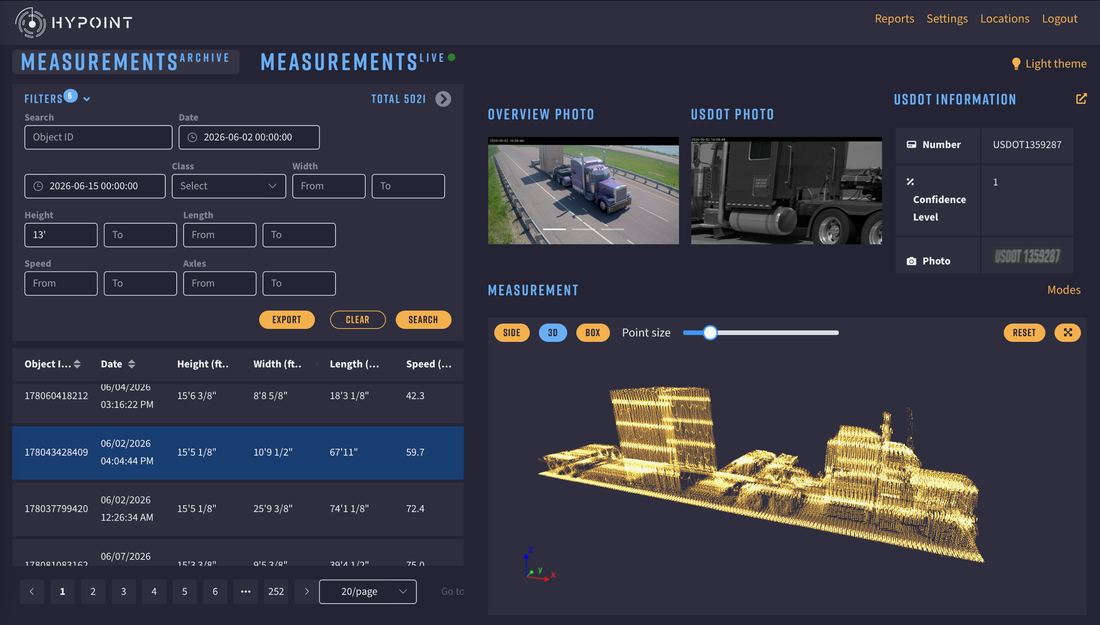
Kestrel OHVD is built for one job: warn the driver, in real time, before the structure. Some agencies and carriers want more than a warning — a complete, verifiable record of why a vehicle was over-height. For that, Kestrel OHVD can be paired with, or the site can instead be built around, Falcon, HyPoint's LiDAR vehicle measurement system. Falcon captures a full 3D point cloud, precise dimensions, imagery, and lane and direction data for every vehicle, and feeds every event into the HyPoint web portal, so you can track activity at the sensor site and identify and verify the specific vehicle behind any over-height alert.
Real-World Example: Why Full 3D Matters
In one documented event, Falcon captured a flatbed hauling an end loader at highway speed. At a glance, the load looked like it cleared the posted restriction. Falcon's point cloud told a different story: the loader's arm had been left raised, roughly 2′ 6⅝″ above the deck, pushing the vehicle from an apparent 14′ 5⅛″ to an actual 16′ 11¾″. That extra height is what caused the strike — the vehicle went on to hit the overhead structure, damaging both the bridge and the equipment it was carrying.
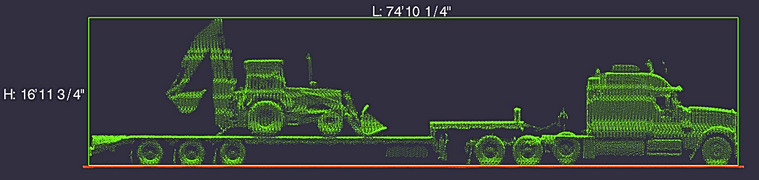
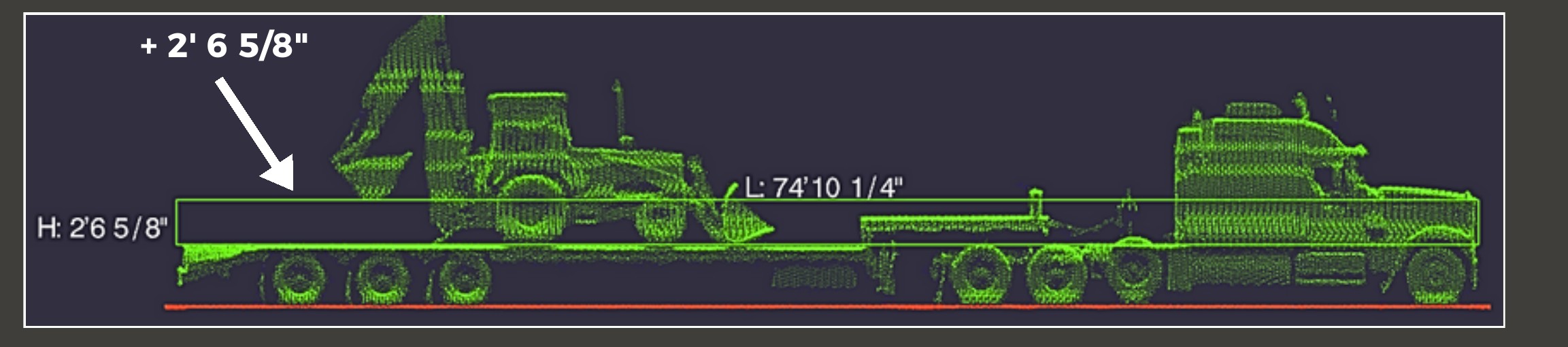
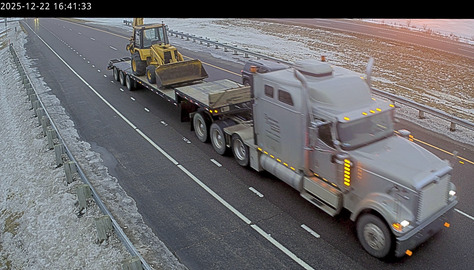
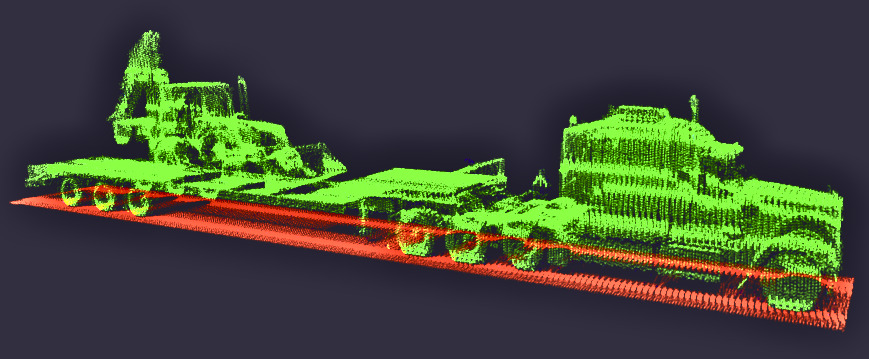
A pass/fail alert tells you a strike happened. A point cloud tells you why.
A traditional single-beam sensor would have logged this as an over-height trigger and little else. Falcon's full 3D capture showed the exact shape and highest point of the load, making the root cause — an unsecured, raised loader arm — clear after the fact, not just that a strike had occurred. That's a defensible, time-stamped record for resolving disputes over clearance or load configuration, and real data for enforcement and driver education going forward.
Ideal Applications
Bridge Strike Prevention
Protecting bridges, tunnels & low-clearance structures.
Portable Warning
Work zones & temporary clearance restrictions.
Tunnel & Gantry Protection
Fixed-mount warning for permanent low-clearance sites.
Detour & Reroute Corridors
Temporary routes where clearance hasn't been evaluated for through traffic.
Rail & Overpass Crossings
Protecting structures where a strike also risks rail or roadway closure above.
System Profile
| System | Kestrel OHVD |
|---|---|
| Sensor Configuration | Single LiDAR sensor |
| Detection Range | Medium |
| Measurements | Height · lane · direction |
| Warning Outputs | Signs, beacons, alerts |
| Cameras | Optional overview camera |
| Solar Power | Optional |
| Power Requirements | Low power, PoE (under 15W typical) |
| Deployment | Fixed or portable trailer |
Built to warn drivers before a strike happens.
Bridge strike prevention · tunnel protection · temporary clearance protection · construction zone protection. Kestrel OHVD supports activation of flashing beacons, DMS messages, gate arms, and other warning devices through configurable digital outputs.
Kestrel warns. Falcon proves.
Kestrel OHVD delivers the live driver warning. Falcon is the answer when agencies also need vehicle dimensions, classification, speed and direction, camera imagery, and a verifiable, image-backed event record for every detection.
Ready to talk through an over-height warning deployment?
Request a System Consultation